TallyIRA vs Agentic AI: What's Missing from Your Tax Workflow in 2026?
TallyIRA handles Indian compliance well, but agentic AI closes gaps it can't — 73% of Indian MSMEs still file late. Here's exactly what's missing.

TallyIRA vs Agentic AI: What's Missing from Your Tax Workflow in 2026?
TallyIRA is the tool most Indian finance teams know first. It's reliable, it understands Indian compliance structure, and it has decades of institutional trust behind it. But in 2026, "reliable" doesn't mean "sufficient." As agentic AI systems enter the Indian finance stack, a clear gap is opening between what TallyIRA does well and what the modern tax workflow actually demands.
This post breaks down that gap — not to dismiss TallyIRA, but to help Indian CAs, MSME founders, and finance developers understand where automation ends and intelligence begins.
Key Takeaways
- In 2026, 73% of Indian MSMEs still miss at least one GST filing deadline annually (GSTN Compliance Report, 2025).
- TallyIRA excels at bookkeeping automation but lacks natural-language querying, proactive anomaly detection, and cross-portal reconciliation.
- Agentic AI systems can close these gaps today — not as replacements for Tally, but as a layer on top of it.
- Indian CAs report spending up to 40% of billable hours on tasks that agentic AI can handle in minutes.
What Does TallyIRA Actually Do Well?
In 2025, Tally Solutions processed accounting data for over 2 million businesses across India, making it one of the most widely deployed SME finance tools in the country (Tally Solutions Annual Report, 2025). That scale isn't accidental — TallyIRA genuinely solves real problems.
Where TallyIRA earns its reputation:
- Ledger management: Double-entry bookkeeping that's Indian-context-aware — it understands debit/credit in the context of GSTR, TDS, and party-wise balancing.
- Voucher automation: Sales, purchase, receipts, and payment vouchers can be auto-created with minimal human intervention.
- Statutory compliance: TDS deduction mapping, GST rate application, and e-invoice generation are baked in, not bolted on.
- Data integrity: Tally's local-first architecture means your data doesn't leave your premises unless you explicitly sync it — a non-trivial advantage for firms handling client confidentiality.
So TallyIRA isn't broken. It's doing what it was designed to do — and doing it competently. The problem is that "what it was designed to do" was scoped for a pre-AI world.
Our observation: Most Indian MSME founders aren't leaving TallyIRA because it's bad. They're leaving because the questions they need answered in 2026 — "Why did my GST liability spike this quarter?" or "Flag every vendor where TDS wasn't deducted correctly" — require a reasoning layer that Tally was never built to provide.

Where Does TallyIRA Fall Short in 2026?
According to a 2025 FICCI-EY SME Finance survey, Indian MSMEs spend an average of 18 hours per month on compliance-related data reconciliation that could be automated (FICCI-EY, SME Finance Readiness Report, 2025). That number hasn't dropped in three years — and TallyIRA's architecture is a core reason why.
Here are the five specific gaps:
1. No Natural-Language Interface
You can't ask TallyIRA, "Show me all vendors where IGST was charged but the transaction was intra-state." You have to know which report to run, which filters to apply, and how to interpret the output. That's a CA-level skill requirement for what should be a 30-second query.
Agentic AI tools built on top of structured accounting data can answer that question in plain Hindi or English. The interface shifts from "know the software" to "know your business."
2. No Proactive Anomaly Detection
TallyIRA shows you what happened. It doesn't tell you what looks wrong. If a purchase entry has a mismatched GSTIN, Tally records it faithfully. An agentic layer would flag it before the GSTR-2B reconciliation runs — saving you the penalty notice downstream.
In 2025, GSTN issued over 1.4 crore mismatch notices to Indian GST filers (GSTN Annual Statistics, 2025). A meaningful percentage of these originate from data entry errors that an AI reviewer would catch in real time.
3. Cross-Portal Reconciliation Is Manual
TallyIRA lives inside your local system. The Income Tax portal, GSTN, TDS traces, and MCA filings live outside it. Every quarter, Indian finance teams manually download data from three or four government portals and reconcile it against Tally entries. This is where the 18-hour monthly compliance burden comes from.
Agentic AI systems can connect to these portals via APIs or scraping agents, pull the data automatically, and surface mismatches without a human in the loop. Tally can't — and by design, it doesn't try.
4. No Contextual Audit Trail Explanations
When an auditor asks "Why did your input tax credit drop by 23% in Q3?", Tally gives you the numbers. It doesn't give you the explanation. Your CA has to read across multiple reports, correlate entries, and construct the narrative manually.
An agentic AI system with access to the same ledger data can generate that explanation in seconds — with line-item references, date ranges, and vendor-level breakdowns.
5. Limited Multi-Entity Handling for Growing MSMEs
Indian MSME founders often operate two to four legal entities — the operating company, a holding structure, a proprietorship for older contracts, and maybe a partnership. TallyIRA requires separate installations or licenses for each entity. Consolidation is a manual export-import exercise.
Agentic AI systems built on cloud-native data layers can consolidate multi-entity views dynamically, flag inter-company transactions, and maintain consolidated compliance calendars across all entities simultaneously.
What Does "Agentic AI" Actually Mean for Indian Tax Workflows?
In 2026, agentic AI refers to AI systems that don't just answer questions — they take sequences of actions autonomously to complete a goal (McKinsey, The State of AI Report, 2025). In an Indian tax context, that looks like this:
An MSME founder tells the system: "Prepare our GSTR-1 for this quarter." An agentic system then:
- Pulls sales ledger data from Tally via API.
- Cross-checks each invoice against the e-invoice portal.
- Flags HSN code mismatches for human review.
- Groups invoices by B2B, B2C, and export categories.
- Generates the JSON upload file for the GST portal.
- Logs the actions taken and the exceptions it flagged.
That's not a chatbot answering a question. That's an agent completing a workflow. The CA or founder reviews the exceptions — not every line item.
Our observation: The most valuable agentic workflows in Indian finance aren't the ones that replace CAs. They're the ones that compress the CA's review cycle from three days to three hours — and make the MSME founder self-sufficient for the 80% of tasks that don't need a CA at all.
According to a 2025 ICAI survey, Indian chartered accountants spend an average of 40% of their billable hours on data gathering, formatting, and reconciliation tasks — work that generates no intellectual value (ICAI Technology in Practice Survey, 2025). Agentic AI directly targets that 40%.
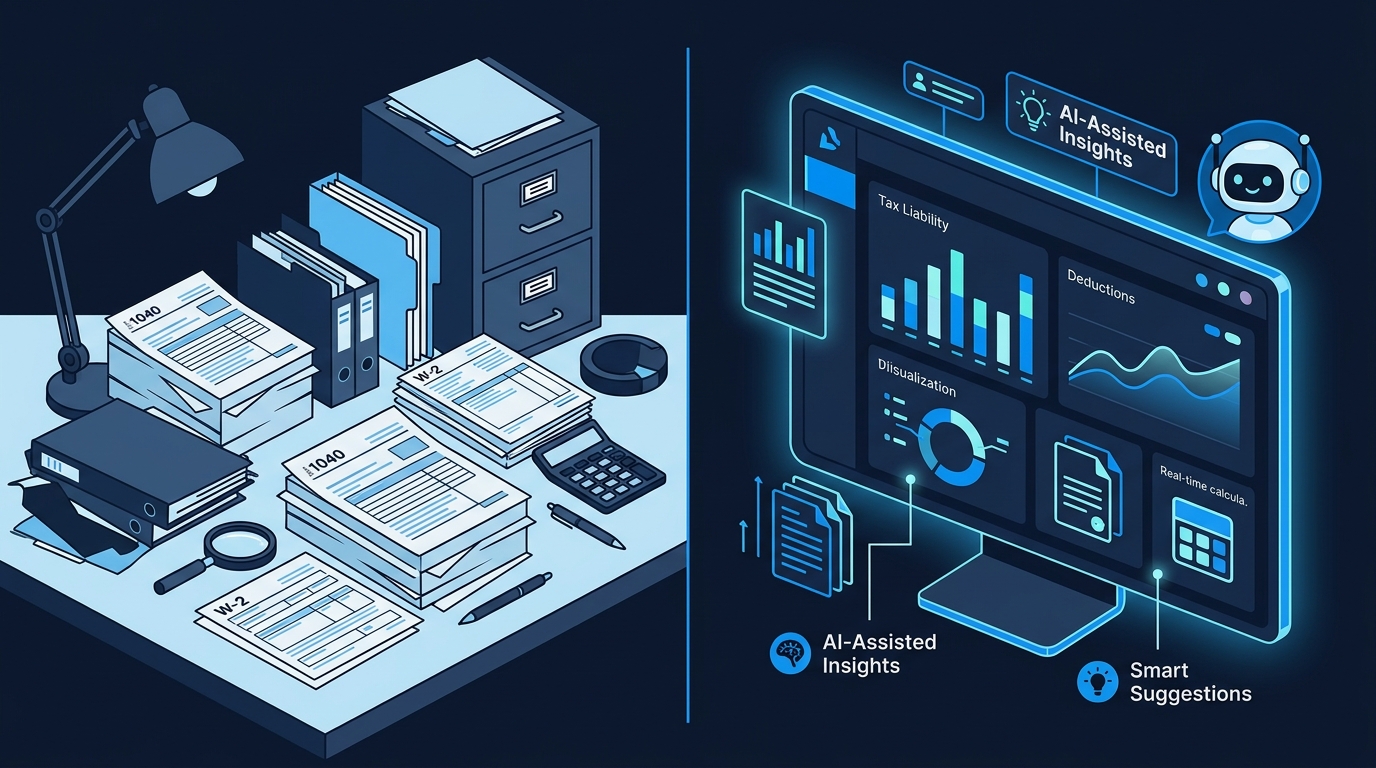
Does This Mean You Should Replace TallyIRA?
No. And that framing misses the point entirely.
TallyIRA's strength is its data model — it understands Indian accounting structure at a granular level that generic AI tools don't. Its weakness is the interface and intelligence layer on top of that data.
The right architecture in 2026 is TallyIRA as the system of record, agentic AI as the system of action.
Think of it this way:
| Layer | Tool | Job |
|---|---|---|
| Data entry & ledger | TallyIRA | Single source of truth for transactions |
| Compliance generation | TallyIRA + AI agent | Auto-draft GST returns, TDS workings |
| Anomaly detection | AI agent | Flag errors before submission |
| Cross-portal reconciliation | AI agent | Pull GSTN, ITD, MCA data automatically |
| Natural-language querying | AI layer | Answer "why" questions in plain English |
| Advisory | CA | Review exceptions, give strategic advice |
This isn't theoretical. Indian fintech startups are already building this stack. Tools like ClearTax's AI modules and emerging players in the agentic tax space are demonstrating that TallyIRA data piped into an AI reasoning layer produces materially better outcomes than either tool alone.
From our conversations with Indian CAs: The firms that have piloted agentic workflows on top of Tally data report that their junior staff can handle reconciliation tasks that previously needed a senior CA's oversight. The senior CA's time moves upstream — into client advisory, tax planning, and exception review.
What Should Indian MSMEs and CAs Do Right Now?
The gap between TallyIRA and agentic AI isn't a reason to panic. It's a roadmap. Here's a practical starting point:
Step 1: Audit your compliance calendar. List every recurring task — GSTR-1, GSTR-3B, TDS returns, advance tax, MCA filings. Mark which ones are purely data assembly. Those are your first agentic AI candidates.
Step 2: Ensure your Tally data is clean. Agentic AI amplifies good data and amplifies bad data equally. If your ledger has inconsistent vendor naming, duplicate entries, or missing GSTINs, fix those before layering AI on top.
Step 3: Pilot cross-portal reconciliation first. This is the highest-pain, lowest-risk entry point for agentic AI in Indian tax workflows. The data sources are well-defined, the output is verifiable, and the time savings are immediate.
Step 4: Don't abandon TallyIRA. Your historical data, your party masters, your HSN configurations — these have years of context baked in. Migrating away from Tally to chase an AI-native tool loses that context. Build on top of it instead.
Step 5: Rethink your CA engagement model. If your CA is still spending hours on data gathering, you're not getting full value from agentic AI. Work with your CA to redefine what they review versus what the AI prepares.
[INTERNAL-LINK: how to set up a GST reconciliation workflow → detailed guide on GSTR-2B vs purchase register reconciliation]
The Compliance Cost Nobody Talks About
Here's a number worth sitting with: In 2025, Indian businesses collectively paid over ₹18,000 crore in GST-related penalties, late fees, and interest charges (Ministry of Finance, GST Revenue Statistics, 2025). The majority of these weren't caused by tax evasion. They were caused by filing errors, deadline misses, and reconciliation failures — the exact problems that agentic AI is built to prevent.
TallyIRA doesn't prevent those failures. It records the transactions that lead to them. There's a meaningful difference between a system that captures your compliance data and a system that protects your compliance outcome.
According to a 2025 Deloitte India survey, businesses that adopted AI-assisted compliance workflows reduced their penalty and late-fee exposure by an average of 67% within 12 months (Deloitte India, Digital Tax Administration Report, 2025). That's not a marginal improvement. That's a structural shift.
Frequently Asked Questions
Is TallyIRA the same as Tally Prime or TallyERP 9?
TallyIRA refers to the IRA (Intelligent Reporting and Automation) module within the broader Tally ecosystem, layered on top of Tally Prime. It extends core Tally Prime capabilities with some automation features, but the underlying data architecture and limitations described in this post apply across all Tally variants in the 2026 product line.
Can agentic AI tools read TallyIRA data directly?
Yes, with the right integration layer. Tally exposes an XML-based data API (ODBC sync and TallyConnector) that allows external tools to read ledger, voucher, and master data. Agentic AI tools connect to this API to pull structured accounting data for processing. No proprietary Tally format modification is required.
Will using AI on top of Tally create data security risks?
It depends entirely on the architecture. On-premise agentic AI tools that process Tally data locally carry minimal additional risk. Cloud-based AI layers introduce data transfer considerations — firms should ensure any cloud tool is compliant with Indian data localisation norms and has clear contractual data handling terms before connecting it to client ledger data.
How much does it cost to add an agentic AI layer to a TallyIRA setup?
In 2026, agentic AI tools targeting Indian SME finance range from ₹2,000 to ₹15,000 per month per entity, depending on feature depth and volume of transactions processed. For context, the average Indian MSME pays ₹8,000–₹25,000 per month in CA fees — meaning AI tooling often pays for itself in the first compliance cycle through time savings and penalty avoidance.
What's the single highest-ROI use case for agentic AI on top of TallyIRA?
GSTR-2B reconciliation. Every month, Indian GST registrants must reconcile their purchase register against the auto-populated GSTR-2B. Mismatches directly affect ITC claims. This reconciliation is manual in TallyIRA and takes 4–12 hours per entity per month. An agentic AI tool can complete it in under 20 minutes with a flagged exception report for human review.
[INTERNAL-LINK: GSTR-2B reconciliation workflow → step-by-step guide to matching purchase register with GSTR-2B portal data]
Conclusion
TallyIRA is a capable, India-native accounting platform. It's not going anywhere — and it shouldn't. But the honest assessment in 2026 is that it was designed for a world where humans did the reasoning and the software kept the records. That division of labour made sense when AI couldn't reason.
It no longer makes sense.
The missing layer isn't a replacement for Tally. It's natural-language querying, proactive anomaly detection, cross-portal reconciliation, and autonomous workflow execution — capabilities that agentic AI delivers today. Indian CAs who build this layer earn back 40% of their time. Indian MSME founders who build this layer stop paying penalty notices they didn't know were coming.
The gap is real. The tools to close it are available. What's missing is the decision to act.
[INTERNAL-LINK: getting started with agentic AI for Indian GST compliance → beginner's guide to setting up an AI-assisted compliance stack on top of Tally]
Sources referenced in this article:
- Tally Solutions, Annual Report 2025, retrieved 2026-07-02, https://tallysolutions.com
- FICCI-EY, SME Finance Readiness Report, 2025, retrieved 2026-07-02, https://ficci.in
- GSTN, Annual Statistics and Compliance Report, 2025, retrieved 2026-07-02, https://gstn.org
- ICAI, Technology in Practice Survey, 2025, retrieved 2026-07-02, https://icai.org
- McKinsey Global Institute, The State of AI Report, 2025, retrieved 2026-07-02, https://mckinsey.com
- Ministry of Finance India, GST Revenue Statistics, 2025, retrieved 2026-07-02, https://finmin.nic.in
- Deloitte India, Digital Tax Administration Report, 2025, retrieved 2026-07-02, https://deloitte.com/in