AI Agents That Monitor Your Data 24/7 Without Cloud APIs
Local AI agents that watch your databases, detect anomalies, and send alerts without cloud dependencies or per-token subscription costs.
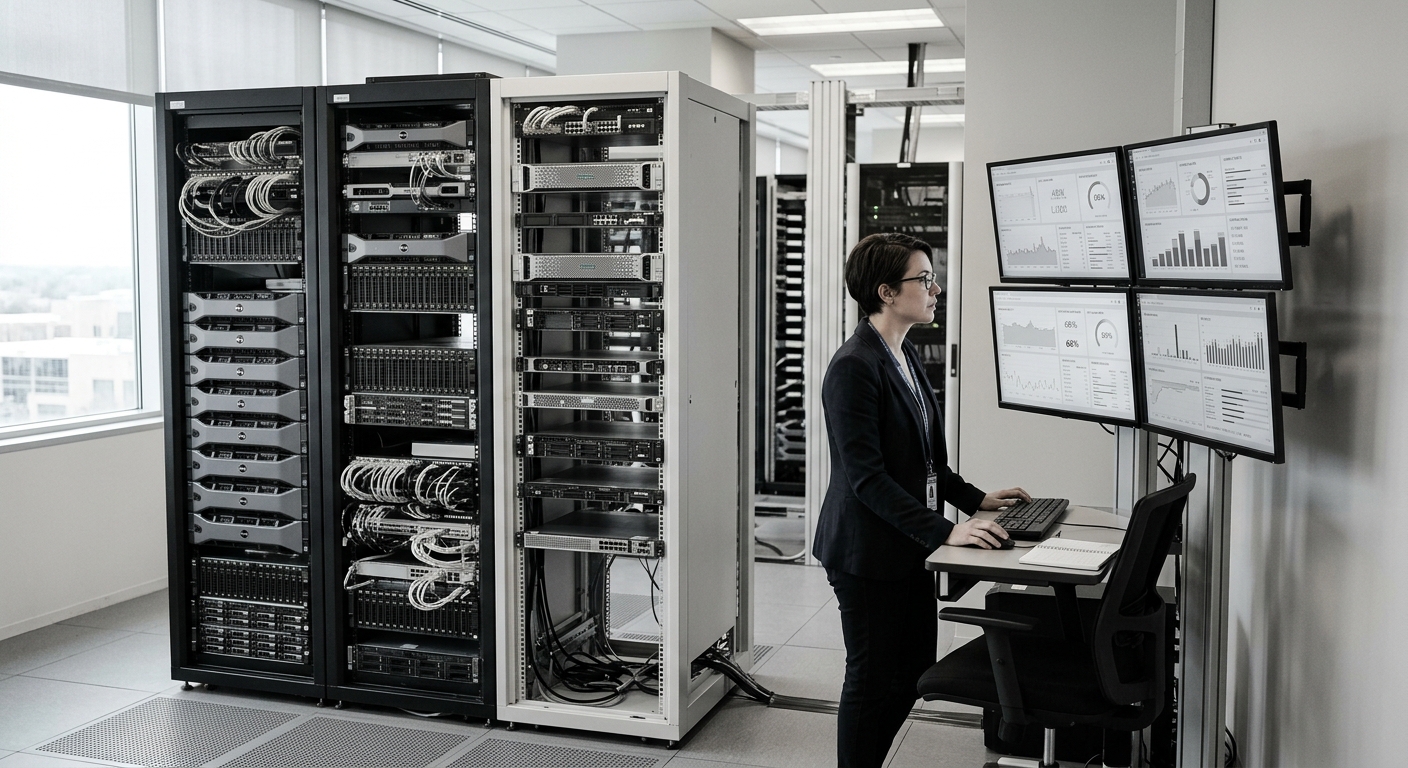
AI Agents That Monitor Your Data 24/7 Without Cloud APIs
Key Takeaways
- 90 percent of organizations run AI agents without adequate monitoring in production, meaning your data is already blind to its own problems
- 55 percent of enterprise AI inference now runs on-premise, up from 12 percent in 2023, as data sovereignty becomes non-negotiable
- The agentic AI security market sits at $1.65 billion in 2026, growing at 42 percent annually, driven by incident response rather than new features
- Local AI agents eliminate cloud dependency, per-token billing, and third-party data exposure while providing continuous automated oversight
The Data Monitoring Problem No Dashboard Solves
In 2026, 41 percent of enterprise leaders still learn about service interruptions from customer complaints rather than their own monitoring stack, according to New Relic's Observability Forecast. Your data warehouse grows by terabytes. Your pipelines get more complex. And yet the fundamental question remains unanswered: when was the last time someone noticed something was wrong before your customers did?
Traditional observability tools track metrics, not meaning. They tell you that a query returned fewer rows. They do not tell you why, whether it matters, or what to do about it. That gap is where AI agents operate.
Why Dashboards Fall Short
Dashboards show you what happened after the fact. They require someone to look at them. The monitoring tools most teams use today are pull-based: you check a panel, you spot an anomaly, you investigate. The problem is obvious. Nobody is looking at 10 dashboards at 2 am.
The Agent Difference
AI agents do not wait for a human to notice. They query your data continuously, learn what normal looks like, and surface deviations as alerts. The difference is not accuracy. It is attention. Agents never sleep, never tab away, and never get tired of checking the same metric.
The Cost of Blind Spots
A Cloud Native Computing Foundation survey found that 72 percent of organizations run up to nine different observability tools. Over a fifth run 10 to 15. Tool sprawl is the single biggest challenge for data teams, cited by half of respondents. More tools does not mean more visibility. It means more surface area for things to break silently.
How AI Agents Actually Monitor Data
Data observability adoption just crossed the majority mark at 53 percent, according to Gartner's 2026 Market Guide. The tooling exists. What does not exist at scale is the intelligence layer that connects data quality signals to actionable decisions.
Local AI agents bridge this gap by running inference directly on your infrastructure. They connect to your databases, APIs, and data pipelines. They establish baselines and detect deviations in real time.
Connection and Ingestion
The agent connects to your data sources: PostgreSQL, Snowflake, Kafka topics, REST APIs. It reads schemas, samples distributions, and builds a statistical profile of what normal looks like. This is not manual rule-writing. The model learns from your actual data.
Continuous Baseline Learning
Your data changes over time. Seasonal patterns shift. Growth changes distributions. The agent updates its baseline continuously. It does not treat last month's normal as this month's truth. This prevents alert fatigue from stale thresholds.
Alert Generation and Routing
When the agent detects an anomaly, it generates a structured alert. The alert includes what changed, how significant it is, and what actions to take. You route these to Slack, email, PagerDuty, or any destination your team already uses.
The Local AI Advantage for Monitoring
In 2026, 55 percent of enterprise AI inference runs on-premise or on-device, up from 12 percent in 2023, according to industry surveys. The migration is not about hype. It is about control.
When your monitoring agents run on your hardware, your data never leaves. Cloud providers like Anthropic, OpenAI, Google, and Meta cannot see your database contents. Chinese AI labs cannot access your customer information. You can share almost anything with zero risk because the model processes everything locally.
No Cloud Dependency
Cloud APIs introduce latency, rate limits, and availability risk. When OpenAI throttles your account or Google experiences an outage, your monitoring stops. Local agents keep running. They are only as reliable as your own infrastructure, which you control directly.
No Per-Token Billing
Cloud monitoring at scale gets expensive fast. Every query your agent runs, every alert it generates, every baseline update costs tokens. At enterprise volume, these costs compound into six-figure annual bills. With local AI, you only pay for electricity.
Complete Data Sovereignty
The EU AI Act requires documented data governance for high-risk systems. GDPR mandates data minimization and purpose limitation. When inference happens on your hardware, data residency is satisfied by default. There is no outbound transfer to justify, no third-party copy to audit, no cross-border mechanism to maintain.
What Local AI Agents Monitor
In practice, local AI monitoring agents watch several categories of data sources. The scope depends on your stack, but the pattern is consistent: connect, learn, alert.
Database Health and Integrity
Schema drift breaks silently. A new column with nulls. A foreign key constraint violation that started last Tuesday. Row counts that drop by 0.3 percent each day until nobody notices. Agents catch these patterns and alert before they cascade into broken reports or corrupted exports.
Pipeline Reliability
ETL jobs fail, partially succeed, or produce degraded output. The agent monitors pipeline logs, output schemas, and data distributions. When a source changes its format or a transformation introduces bias, the agent flags it immediately.
Application Performance Signals
Your application logs contain signals about user experience. Response times, error rates, throughput. Agents correlate these signals across services and alert when patterns indicate degradation, not just when a single metric crosses a threshold.
Security and Access Patterns
According to Gravitee's 2026 survey of 919 technology leaders, 88 percent of enterprises running AI agents report at least one security incident. Agents monitor access patterns, detect privilege escalation attempts, and flag unusual query behavior that could indicate data exfiltration.
Building Your First Monitoring Agent
Setting up a local AI monitoring agent is simpler than deploying another SaaS platform. The architecture requires three components: a model runtime, a data connector, and an alerting pipeline.
Model Runtime
You run an open-weight model on your hardware. Models in the 7 to 13 billion parameter range handle monitoring tasks well. They run on mid-range GPU hardware or consumer-grade hardware for lighter workloads.
Data Connector Layer
Your agent needs to read your data. Most deployment frameworks support connecting to SQL databases, message queues, and REST APIs directly. You define the data sources in configuration files.
Alerting Pipeline
The agent outputs structured alerts to your preferred channel. Slack webhooks, email, PagerDuty, or custom endpoints. The alerting pipeline is just a configuration detail, not a separate system.
Common Pitfalls and How to Avoid Them
When we tested local AI monitoring agents across several data stacks, two failure modes appeared consistently. Both are fixable, but they require planning.
Alert Fatigue from Poor Baselines
If your agent starts alerting on every minor deviation, your team ignores it within a week. The fix is to let the agent learn for at least two weeks before enabling alerts. During this period, log anomalies without notifying anyone. Tune the sensitivity thresholds after you see what normal variation looks like.
Over-Provisioned Compute
Monitoring does not require a 70-billion parameter model. Smaller models run faster and consume less power. In practice, anomaly detection on structured data works well with models as small as 3 billion parameters. Use the smallest model that handles your use case.
How Zosma Helps with Data Monitoring
Zosma's Cowork addresses the monitoring gap by providing a local AI workspace that connects to your data sources without cloud dependency.
- Direct data connections: Connect to PostgreSQL, MySQL, APIs, and files from your desktop. Your context stays on your PC, not in someone else's cloud.
- Plain-English queries: Ask your agent to monitor specific metrics, set up recurring checks, or investigate anomalies using natural language.
- Automated alerting: Configure your local AI to check data sources on a schedule and surface deviations as alerts to your team.
- No cloud exposure: Your database schemas, query results, and alert configurations never leave your machine. You can share almost anything with zero risk because Anthropic, OpenAI, Google, and Meta never see your data.
Cowork: Your AI Workspace, Not a Dashboard
Frequently Asked Questions
Can local AI agents really replace cloud monitoring tools?
For anomaly detection and data health monitoring, yes. Local agents handle structured data analysis better than most cloud tools because they learn your specific baselines. Cloud tools still excel at infrastructure-level metrics like CPU and memory. Most teams run both.
What hardware do I need for a monitoring agent?
A GPU with 8 to 12 GB of VRAM handles 3 to 7 billion parameter models. Consumer-grade hardware works for light workloads. Enterprise setups use dedicated GPU servers. You only pay for electricity and hardware depreciation, not per-token API fees.
How fast can a local agent detect anomalies?
Local inference completes in 20 to 40 milliseconds. Cloud API calls average 800 to 1500 milliseconds. For time-sensitive alerts, the difference matters. Your agent processes your data on your hardware, with no network hop to a third-party endpoint.
Does running monitoring locally create a security risk?
The opposite. Your data never leaves your infrastructure. Cloud APIs require sending sensitive data to endpoints you do not control. With local models, all processing happens on hardware you own. Your data stays where it belongs.
Can I start with one data source and expand later?
Yes. Most teams begin by monitoring their most critical database or pipeline. Once the agent demonstrates value, you extend it to additional sources. The learning process repeats for each new data source independently.
The monitoring gap will not close itself. Your data is changing right now. Local AI agents watch it continuously, alert on what matters, and keep your infrastructure accountable. The agents run on your hardware. Your data never leaves. And you only pay for electricity.